After a 2-year pause and a small ‘trial run’ last year, we cranked up some cider in Five Islands on the weekend of October 21 this fall. The cabins were once again full, the forecast threatened rain but it mostly held off, the kids ran around in a delightful unruly herd, and the juice flowed freely. In the end we handily polished off about 3 bins (~1800lb), producing 150 gallons of cider and finishing in time to tear down and clean up before a big dinner.
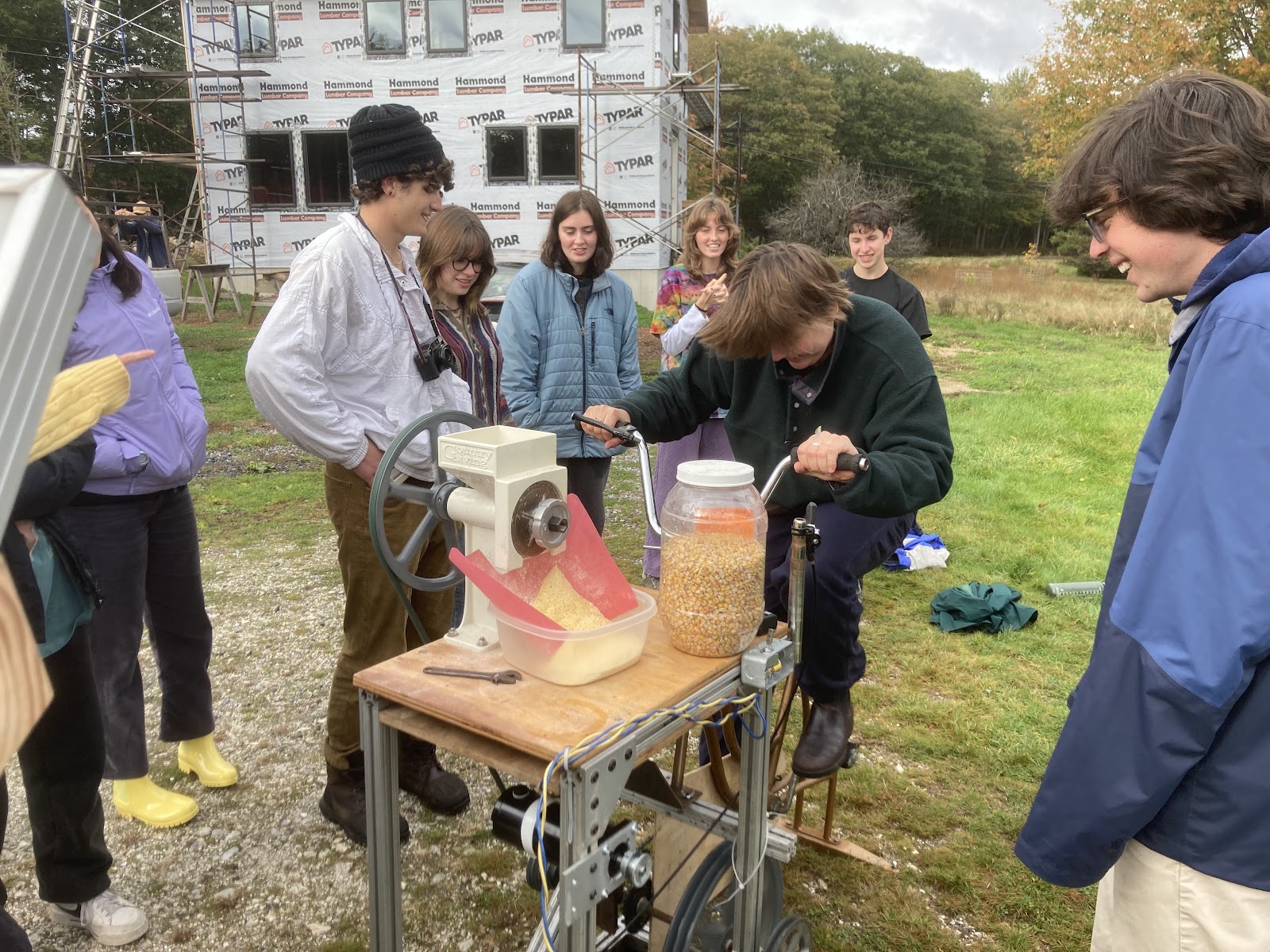
For me the week started on Monday with an interesting full-circle experience; I was invited by my grade-school friend Philip Francis to give a talk to the students at his Seguinland Institute alternative gap-year program on the other side of Georgetown island, sharing my experience growing up on an off-grid homestead and subsequently working in clean energy startups. In preparation for this my folks and I dug through old picture albums from the pre-electricity days to put together a slideshow for the morning, and after lunch the class re-located to Joanna and Jed’s for a tour of a homestead-in-progress and a demonstration of small-scale grain milling. The demo used the same multipurpose pedal-power stand that runs the hydraulic cider press, with the heavy duty aluminum grain mill bolted to a sliding platform on top and belt-driven from the flywheel. To add a modern twist, I assembled two cast-off PV modules (about 350W total) reclaimed from the Kaufmans’ catamaran, mounted on a pallet with an MPPT charge controller and a small deep-cycle battery, and bolted a salami-sized surplus 12VDC brushed motor to the pedal stand (the specific motor is apparently intended for use in a truck-bed salt/sand spreader). So the students were able to experience how much elbow-grease is required to hand-crank corn into flour, then observe how much easier it was to grind using pedal-power and gearing, and finally flip a switch and let solar-plus-storage do the same thing, faster and more quietly, while we carried on a conversation. It was a good time, both in preparation and in talking with Philip and the students, who were mostly late-teens and suburban/urban in background; I got the sense that any kind of hands-on rural living was a pretty foreign concept for them, let alone building your own house and growing/milling your own grain.
The middle part of the week was given over to fiddly hardware details, cleaning and organizing cabin space, gathering food, and schlepping bins of apples for the event. We got a nice mixed bin from Brackett’s in Limington, and I had an errand in northern MA so for old time’s sake I also got a bin from Autumn Hills, which is under energetic new management since Anne retired; they always have a great variety and apparently have a new block of cider apples that is coming into production soon. With Dave’s help I also cleared out and re-energized the pop-up kitchen that we built in the big barn using Craigslist appliances back when Ummy and Poppy’s house was rented out.
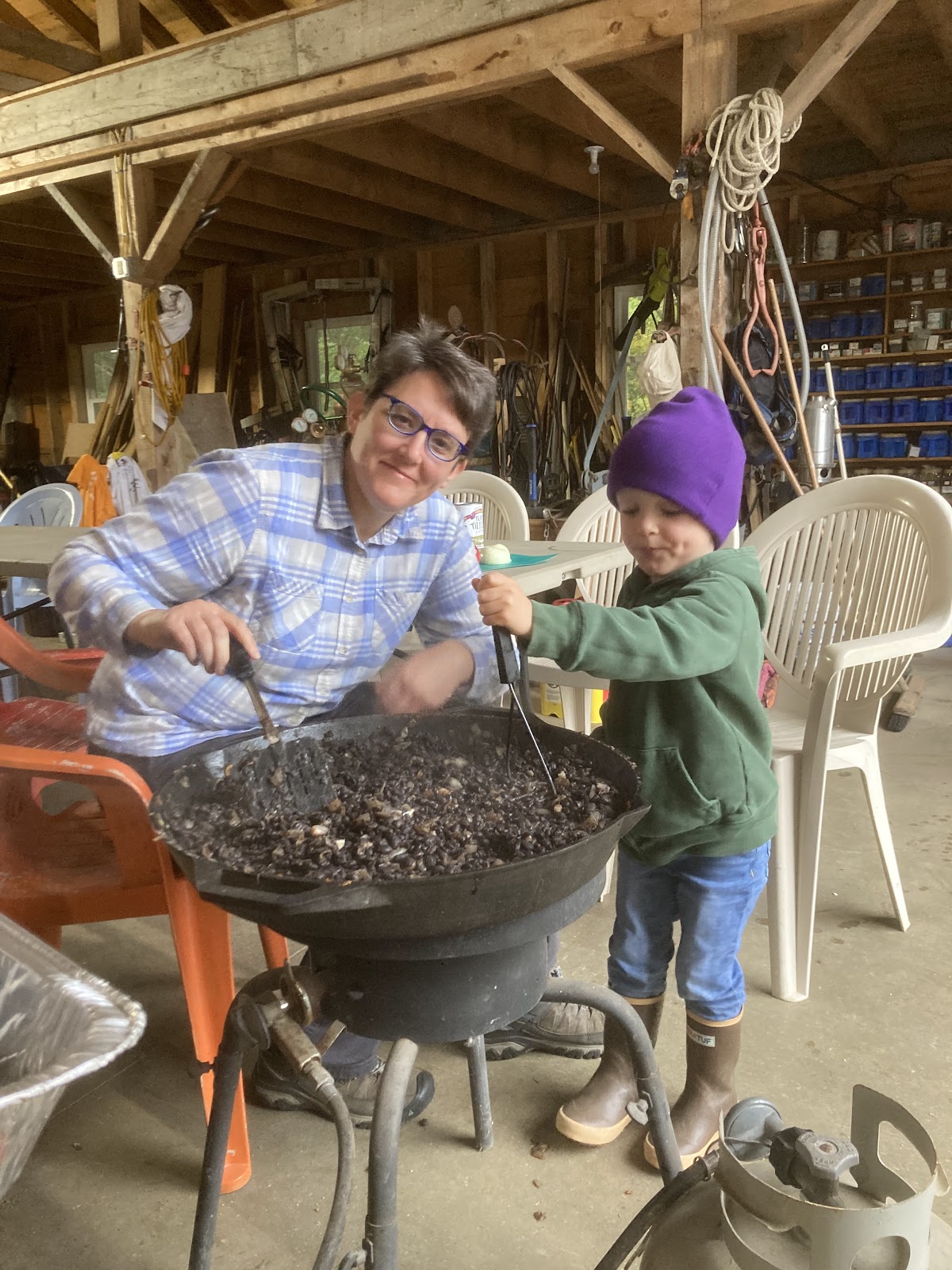
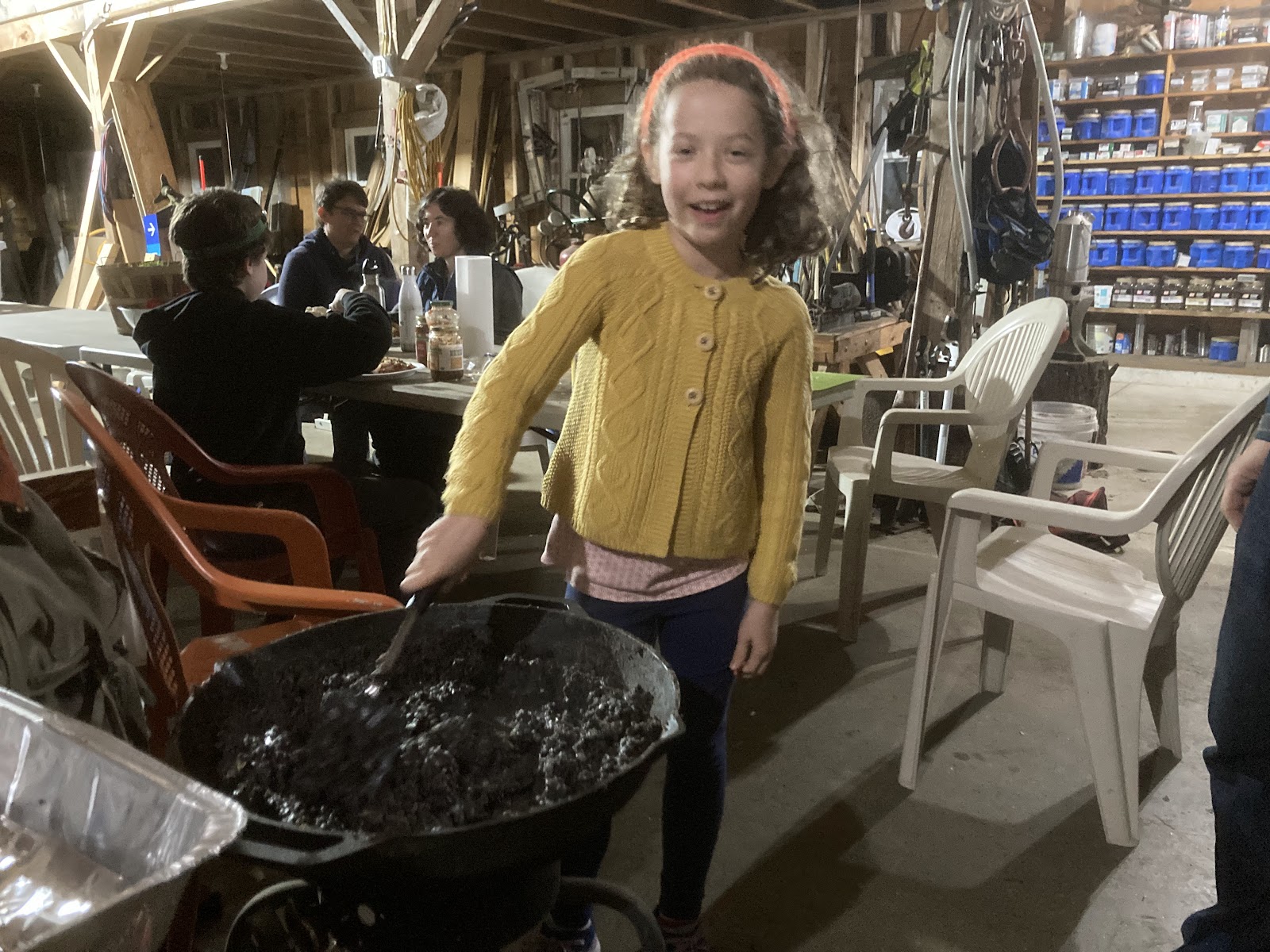
On Friday morning we attempted an ambitious tarp setup spanning between the two barns, but the wind was too strong and we retreated to a sturdier and more modest setup that worked well. On toward evening we made the customary giant skillet of refried black beans for asynchronous burritos as families arrived, ate, and got set up in cabins, followed by a campfire with s’mores.
One big change we piloted last year was shifting the pedal-powered cider equipment from the original big barn to the slightly smaller sugarhouse/cider barn that my folks subsequently built so they could (hypothetically) put livestock in the big barn at some future date. We replicated the original counterclockwise flow from washing to grinding to pressing to tank, and most of the equipment just sits on the floor, so relocating wasn’t a big deal. The exception was the dunk tank/apple elevator/tumble washer setup, which was previously attached to and stabilized by one of the 6×6 posts of the big barn. The space in the sugar barn is a bit narrower, and it lacks both the post and the floor drain that we previously took advantage of, so we decided to set it up just outside the door of the barn, under a heavy-duty tarp awning we stretched above the wide doorway.
Last year the apples were pretty clean and the crew was smaller, so we didn’t set up the elevator/washer, but this year we made a morning-of decision to set it up. This ended up being a near-run thing, since the various pieces that connect at precise distances via belts and bike-chains normally sit on a nice flat slab, and were now standing on a sloping gravel driveway, but in the end worked out fine with the help of sawhorses, blocks, and plenty of cedar shims. I’m glad we set it up; besides making for cleaner cider it’s a cool visual spectacle and a reliable kid-pleaser.
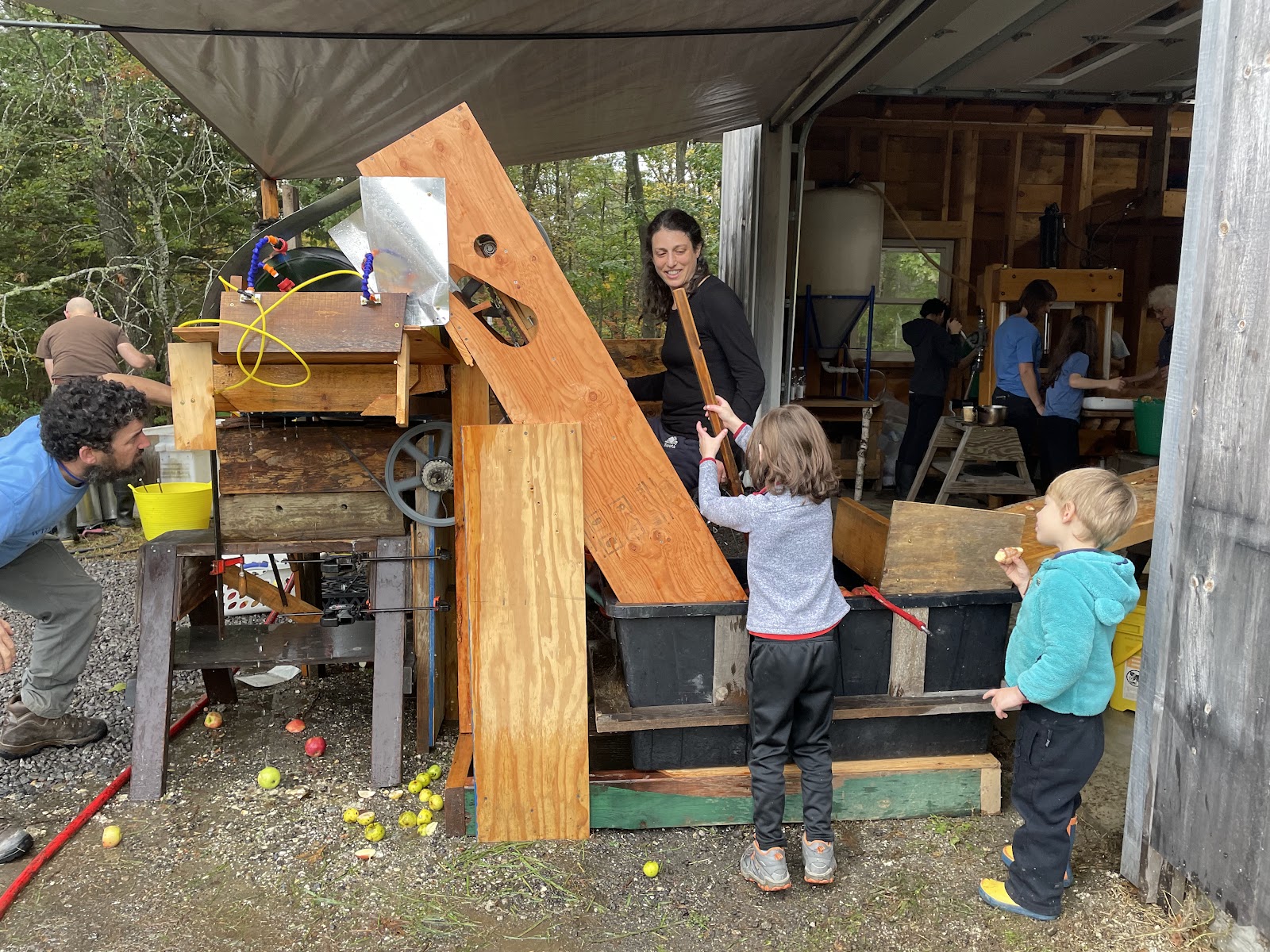
Despite setting up the washer, we got started before 10AM on Saturday. Sadly the crop from Five Islands was a complete bust; as with many other orchards in New England this year, the hard freezes in the spring and strange weather all but eliminated fruit production on the North End. But other trees in other parts of the island escaped the damage; besides the two bins from Brackett’s and Autumn Hills, my folks managed to scrump an impressive quantity of apples around town, amounting to probably a third full bin’s worth that were arrayed in the ubiquitous reclaimed Tidy Cat buckets. Given the large, energetic labor pool we set a high standard of quality; each apple was individually inspected and any bad spots cut out with paring knives before rolling down a ramp into the rinse tank. From there, enthusiastic small children encouraged the floating apples into the elevator, which steadily raised them in ranks to tumble into the spinning tumbler (made from a plastic culvert lined with green astroturf), where a combination of mechanical scrubbing and a fine mist of clean water got them tolerably clean.
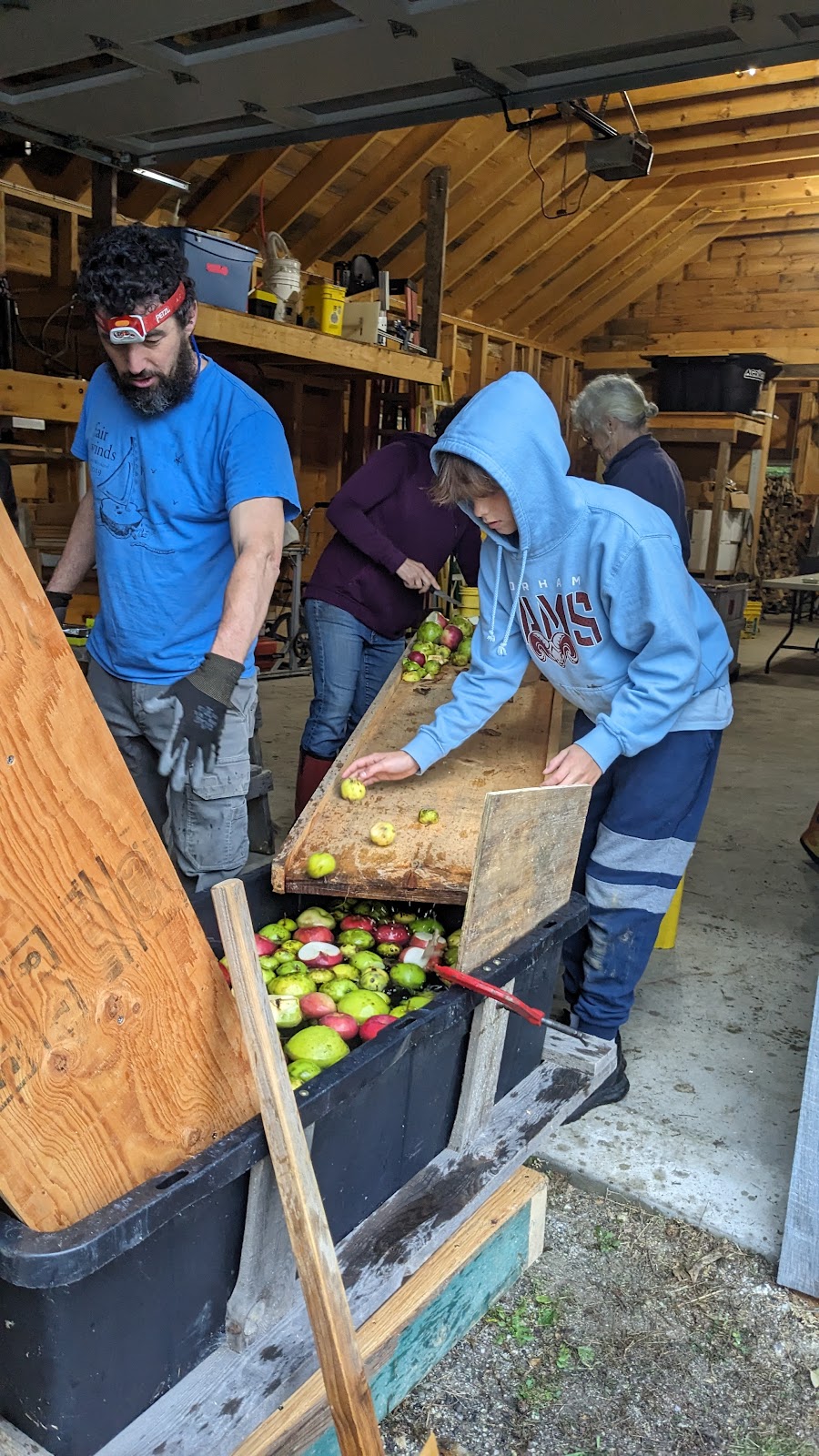
The tumble washer delivered apples and rinse water into a laundry basket below the outlet of the drum; this part of the setup could use some refinement, as a fraction of the apples managed to bounce out and escape, where they had to be fed back into the washer. The laundry baskets were also marginal for the task; given that they probably came from the Georgetown Mall, and in any case weren’t spec’d for 50lb of wet apples in the first place. If I have time ahead of next year, the support and containment aspects of the washer could use a thorough going-over.
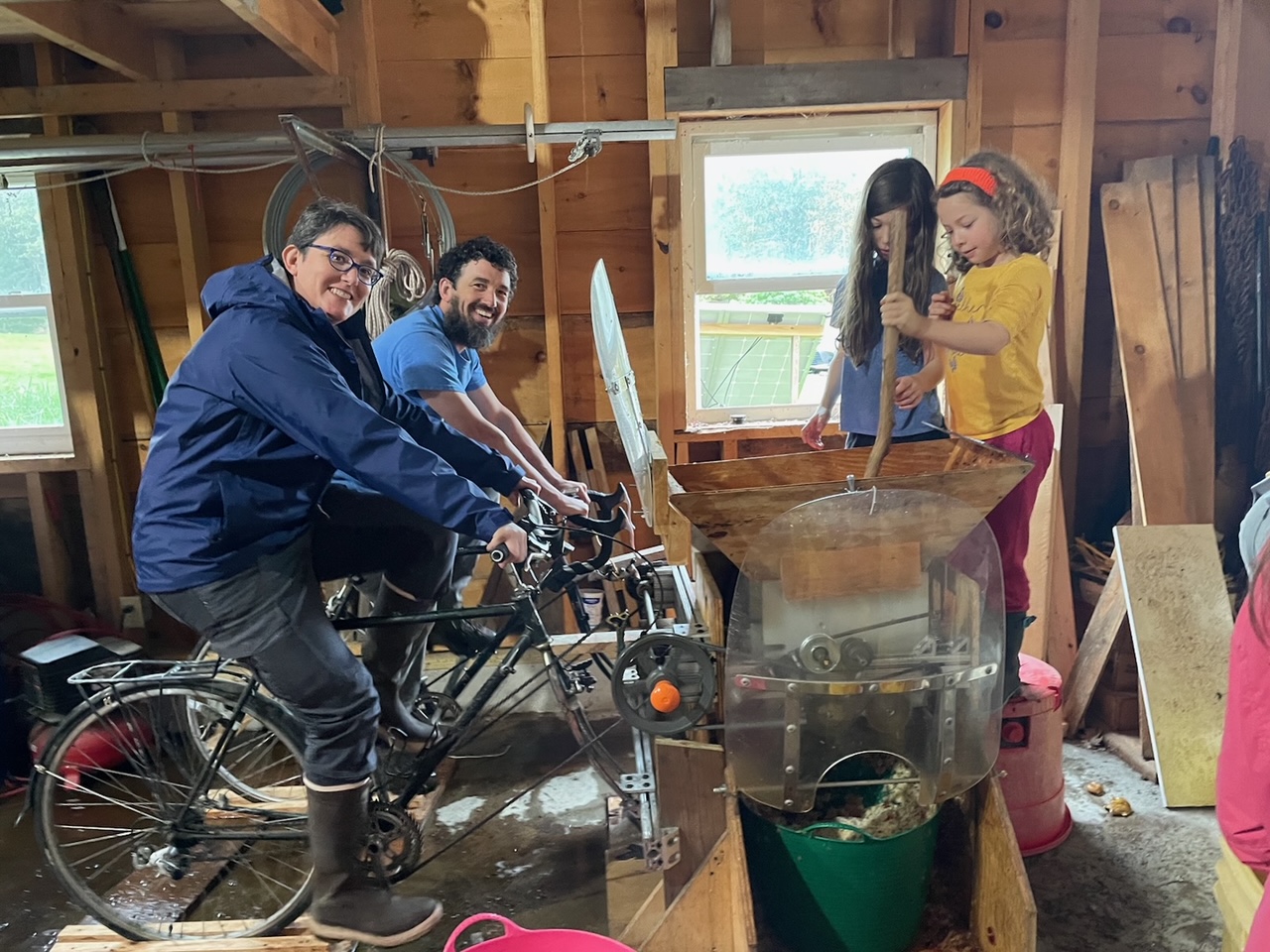
From there the baskets were emptied into sturdier tubs which were lugged over to the pedal-grinder setup, which was little-changed from previous years. Eerik being in Sweden with a new baby, we didn’t make another attempt to couple his erg to the grinder this year, though if it had been sunny I would have been sorely tempted to bolt on a DC motor and attempt to augment the pedaling effort with 350W of direct-fed PV power (as prototyped on the grain grinder for the Seguinland demo). The grinder delivered finely-shredded apple pulp into flexible plastic tubs below, which when full were lugged to the press on the other side of the barn for loading into the cheese frame as usual. Once four cheeses were stacked with wooden grates between, the assembled stack was slid under the press and carefully squeezed down to extract the cider.
Unlike the grinder, the amount of gross shaft work needed to press out a stack of cheeses is not huge (a medium-sized kid can easily do it with the right technique), but there are a couple of tricks to it. First, the cheeses should be made up carefully in an aligned vertical stack, and not too full (five thinner ones is better than four stuffed to the gills). Second, for the initial pressing that extracts the majority of the juice, it’s important to pedal very slowly; while the pulp is still soft, the stack can get squirrelly and the grates can go out of parallel in a way that reduces pressing efficiency, and in extreme cases can require the stack to be torn down and re-equilibrated. Then, once the flow of juice starts to slow, pressure is steadily ramped up to get the extraction rate above 70%.
This is where skillful manipulation of the control valve in conjunction with the heavy flywheel on the jackshaft of the pedal stand is important; the log splitter pump has an ‘automatic transmission’ effect; internally it’s really two hydraulic pumps in parallel, and the faster one is automatically disabled (via internal fluidic logic) once the ram encounters resistance and the outlet pressure rises above 600psi. In the intended application on a log splitter, this advances the ram quickly to engage the log, then slows down and increases the pressure-generating ability of the power source as necessary to split a tough log. In our application the same effect is convenient; just as the pedaling gets difficult, the resistance drops off noticeably and a short burst of vigorous pedaling easily gets the cylinder pressure up to ~1500psi – above which we see diminishing returns in juice flow. Even a small kid can manage to hit the target pressure by setting the hydraulic control in neutral, spinning up the flywheel while the pump is isolated from the press, and then throwing the lever to the ‘down’ position, which reconnects the pump to the cylinder, so the energy stored in the flywheel kicks the dual-speed pump over into the low-flow, high-pressure mode, and the residual energy in the flywheel (combined with modest pedaling) readily attains the target pressure.
All in all, the application of these hydraulic system components – designed for high-speed, high-power applications with a multi-horsepower engine – to lower-speed, limited-power pedal-driven use has been surprisingly effective and satisfying. One important detail is that the internal check valve in the log splitter pump leaks at a high enough rate to cause the cylinder to lose pressure at a noticeable rate when pressing down on the cheeses, leading to an annoying need to pedal steadily against high resistance just to hold a constant pressure on the stack for final extraction. So years ago we installed a soft-seat hydraulic check valve in line with the down-pressing end of the cylinder, with a bypass valve in parallel; this completely eliminated the leakage, such that the pressure only decays slowly as the last of the juice seeps out of the pomace.
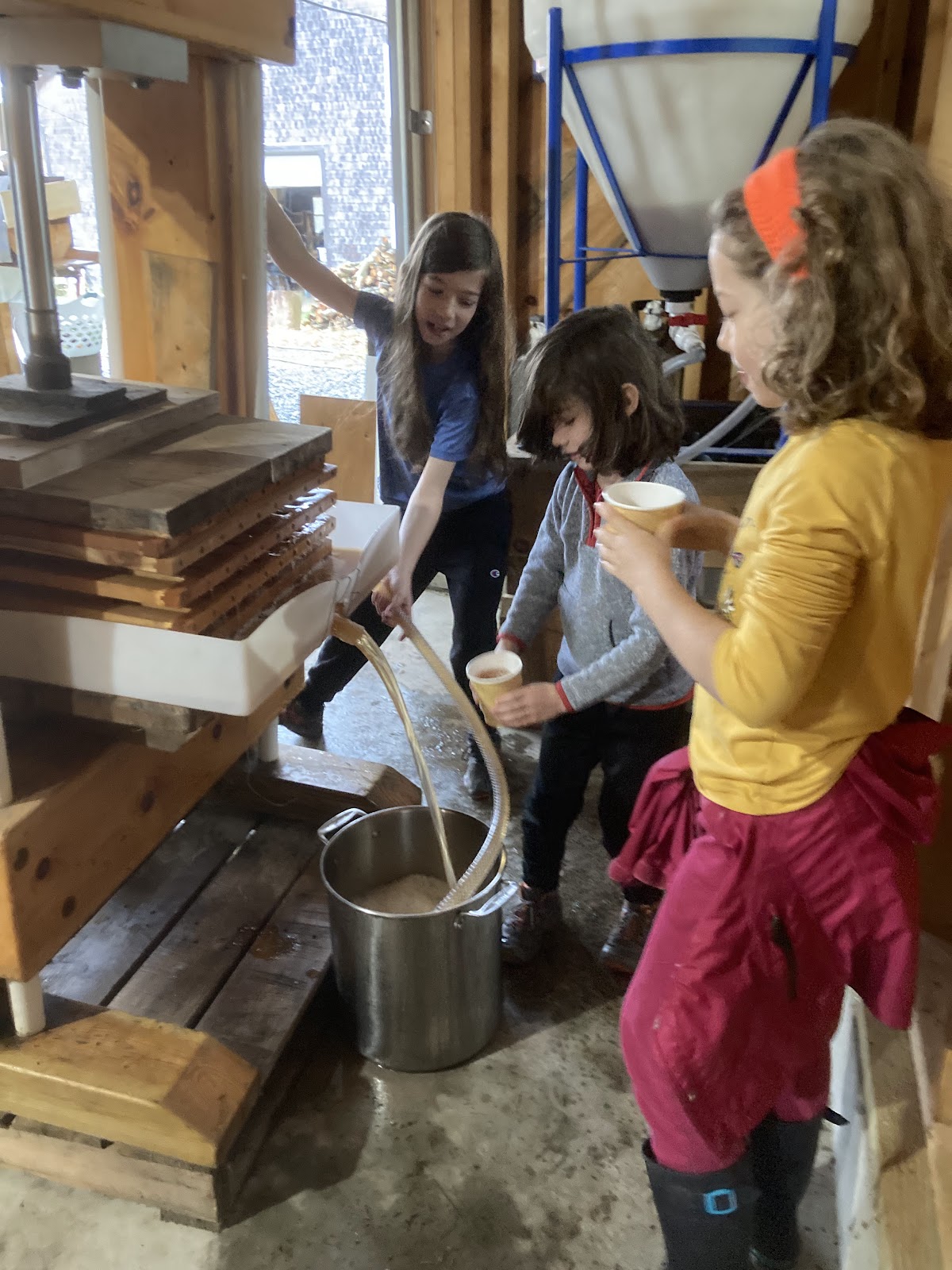
The juice gushes out of a hole cut in the formed polyethylene press pan and falls into a modest-sized stock pot on the floor; from there it is slurped up by a hand-pumped diaphragm-type bilge pump (Bosworth model 500) and deposited in the elevated 100-gallon conical-bottom tank that we have used for many years. From there the accumulated cider output is portioned into gallons, half-gallons, carboys, mugs, etc.
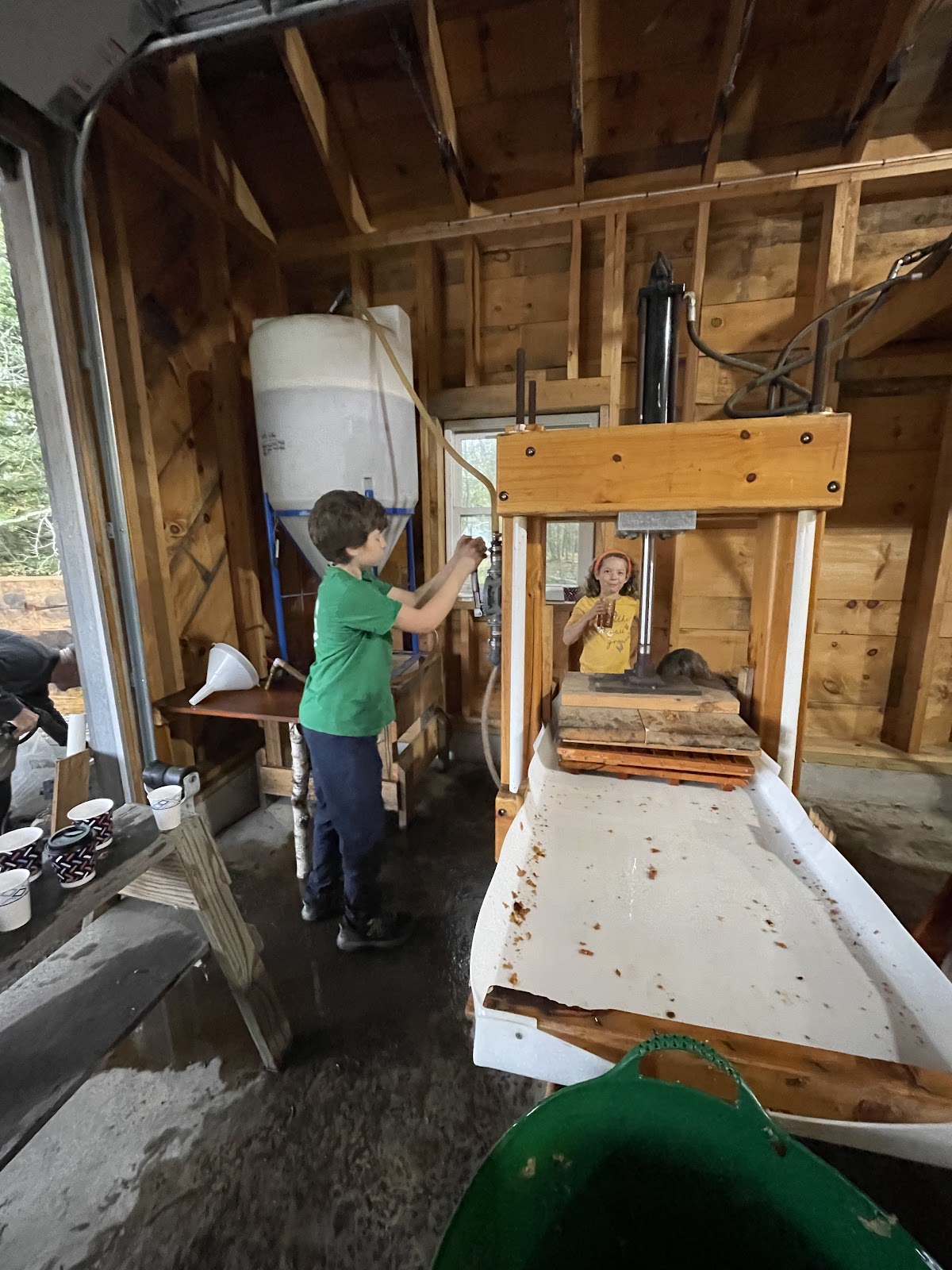
Operating the hand pump is a popular job for the smaller children, though quite satisfying for anybody who tries it; wielding the wooden crusher that mashes the apples down against the spinning primary grinder drum is another popular kid task. All told, more and more of the operation of the cidermaking process is run by the next generation, some of whom have become quite skilled at certain tasks (e.g. operating the pedal-hydraulic press for efficient juice extraction).
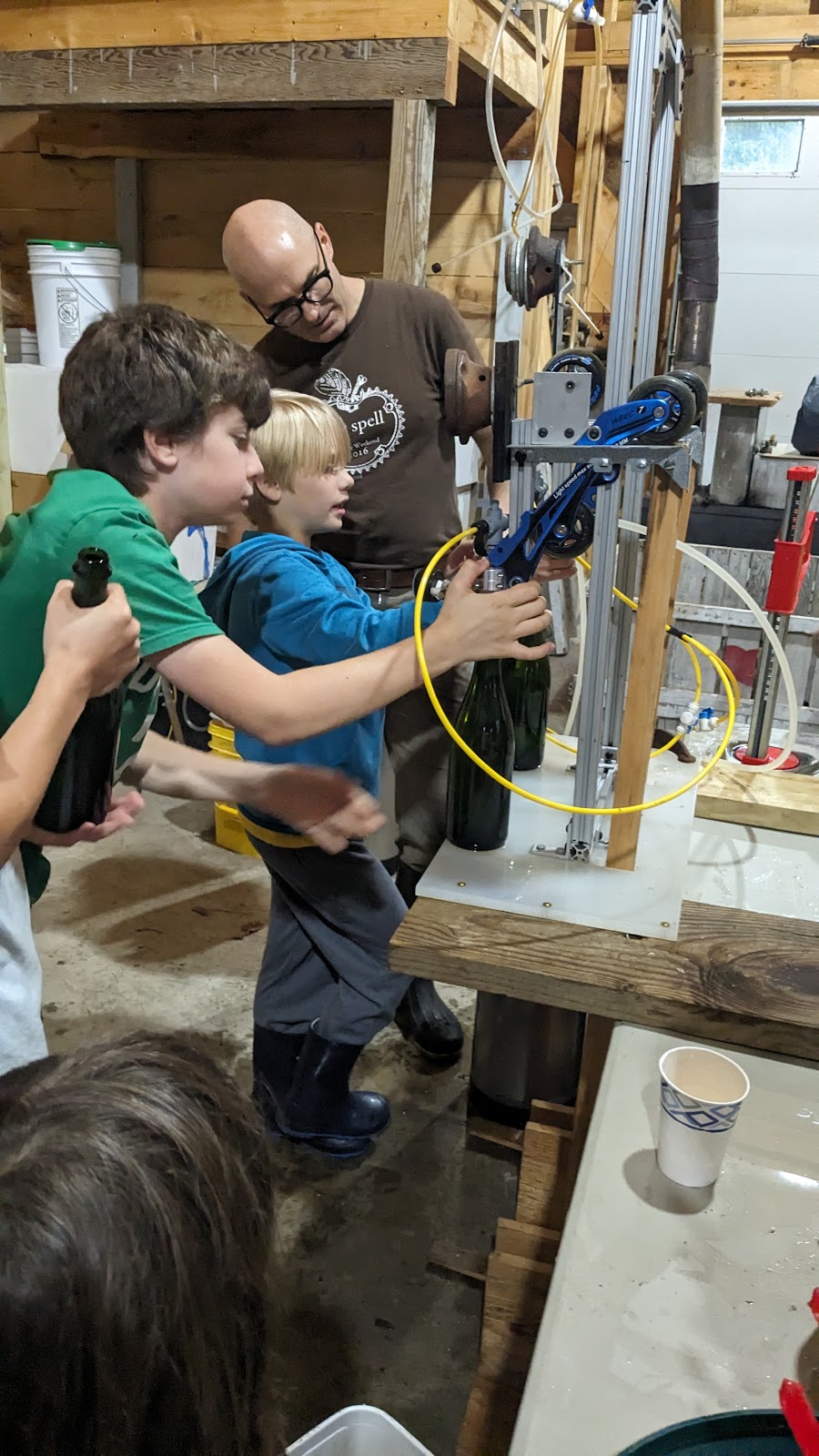
With Eerik attending to family matters across the Atlantic, Holly gamely took on the task of bottling the small batch of hard cider from last year’s pressing – despite being bleary-eyed from his very recent return from an extended work trip to China. These 3 carboys had been mellowing in the root cellar since last fall; he and a team of helpers cleaned out a number of Cornelius kegs, racked the cider into them, chilled and carbonated them, re-assembled the complex double-barreled counterpressure filler setup, and packed several cases of 750ml crown-cap bottles for the crowd to take home.
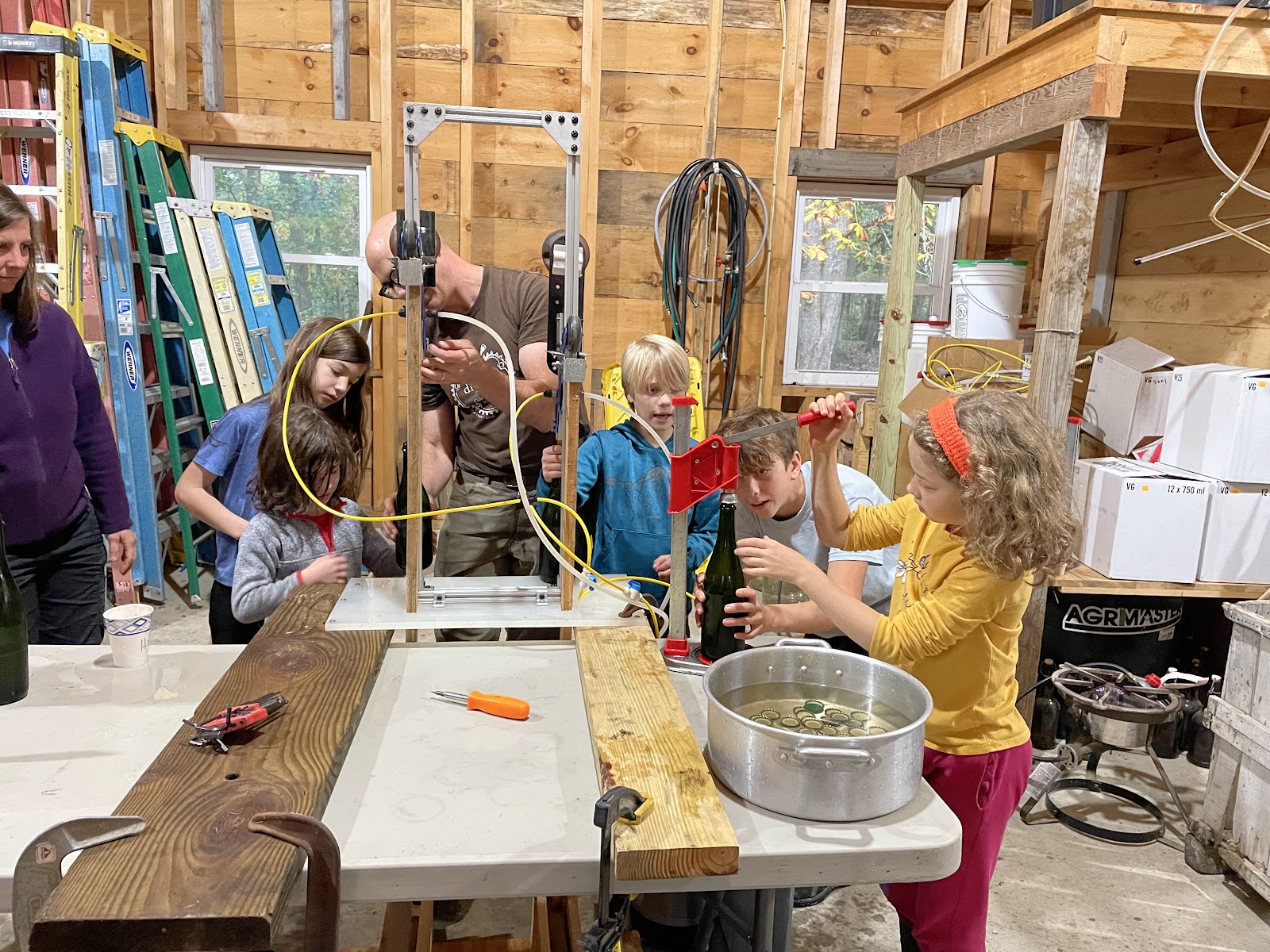
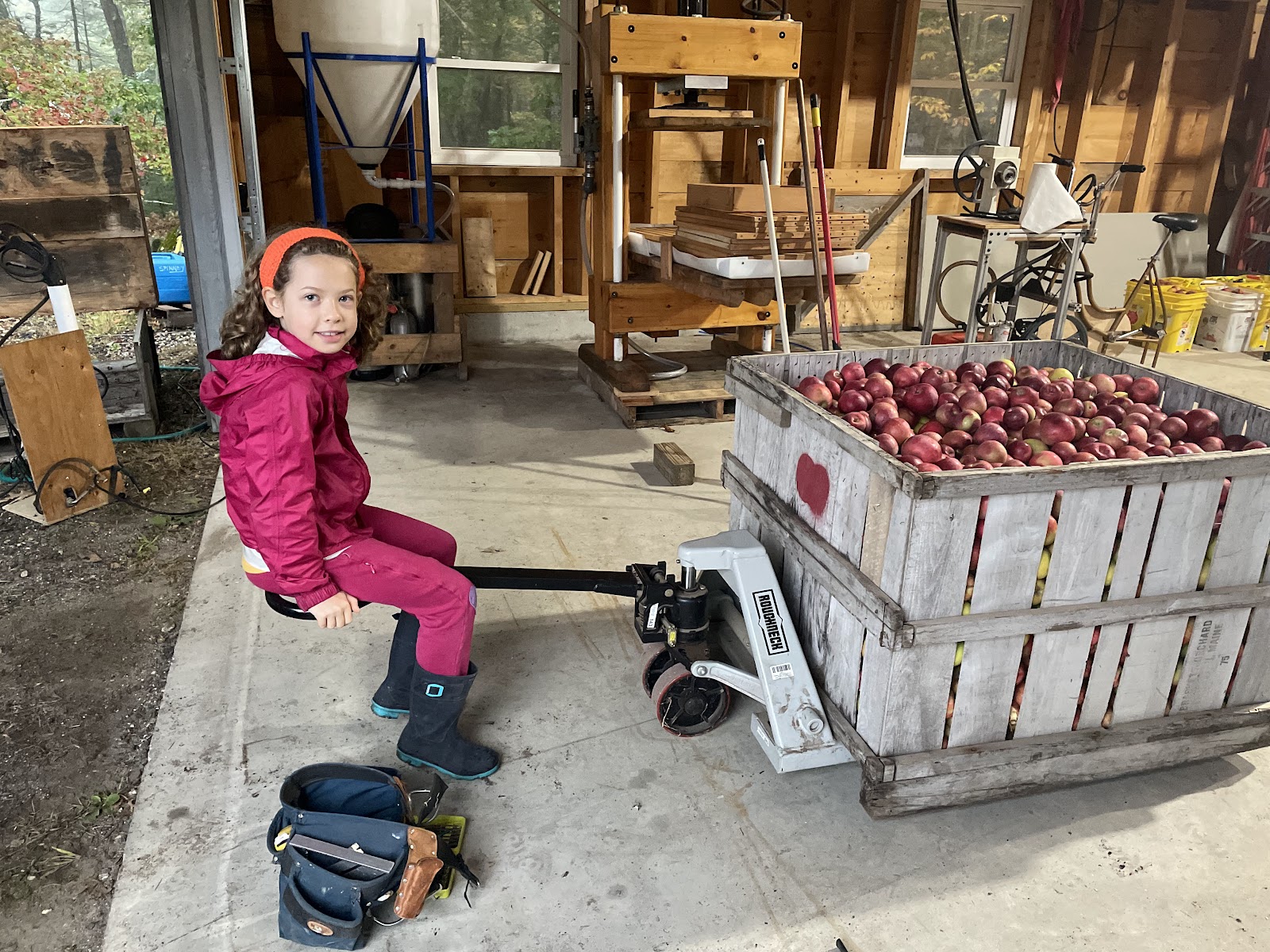
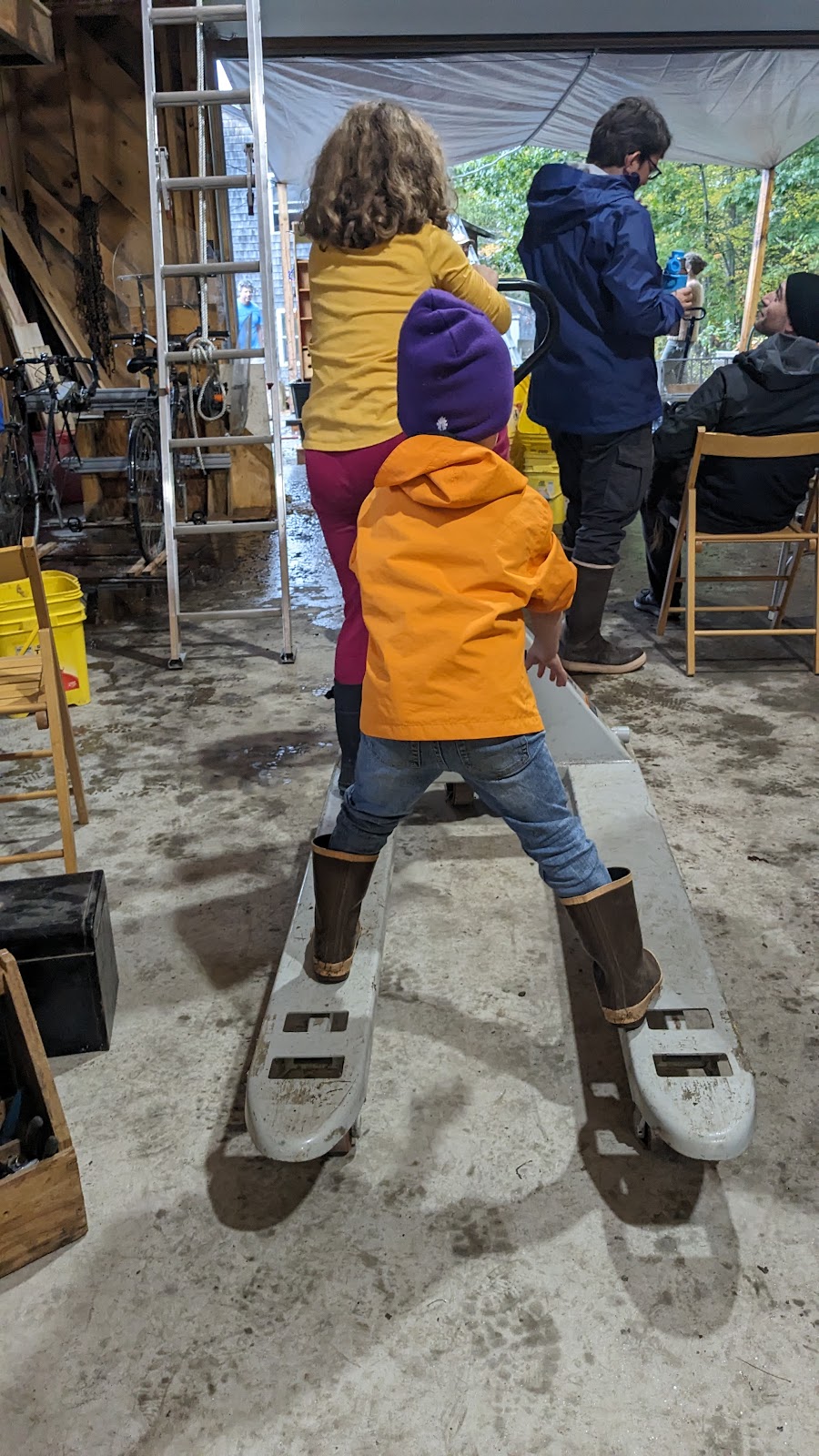
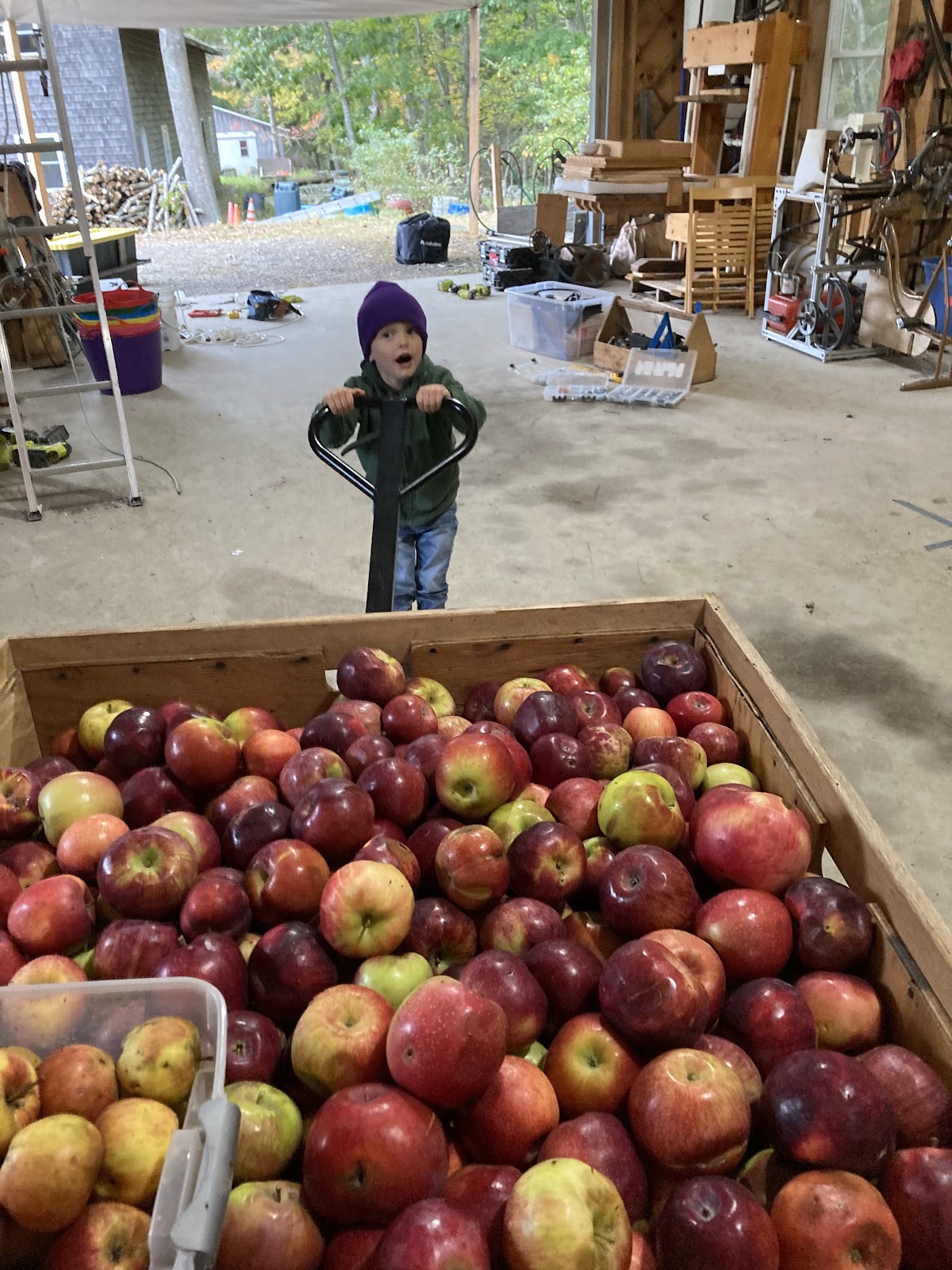
We had an ample crew for the work even though the threatening weather kept the usual large crowd of Georgetown locals to a minimum; this was just as well given that packing the usual crowd into the limited space under cover would have been a challenge. By the middle of the afternoon we had pressed the last of the apples; the rain mostly held off though an increasing drizzle kept things damp outside. All hands transitioned smoothly to taking apart the cider equipment for cleaning, packing it for storage, and swabbing the accumulated apple muck out of the barn. The equipment has its own place in the sugar barn, packed into a corner, which is a big improvement over hoisting everything into the lofts of the big barn. Cleanup and packing has been significantly streamlined since most of the equipment (excepting the grinder assembly itself) is palletized and can be schlepped around the barn with a pallet jack. The pallet jack has been a surprisingly great addition, not least because the smaller kids think it’s the best toy ever – they pump it (and various payload items ranging from other kids to empty 15-bushel apple bins) up and down, roll it around, crash it into things, etc. Sometimes they can even be recruited to do something useful with it, or convinced to lend it to an adult for a couple minutes.
I had pre-made several lasagnas which went in the barn oven while the crisps that Holly engineered went in the house, and we set up the four long church-supper tables donated by the Jones family for dinner, together with a large, motley assortment of plastic lawn chairs salvaged from the transfer station and the high tide line. Together with assorted pot-luck dishes from the crew, we had a fine dinner in the big barn, after which the remaining day trippers got on the road and the rest of the tired crew retired to the cabins for the night.
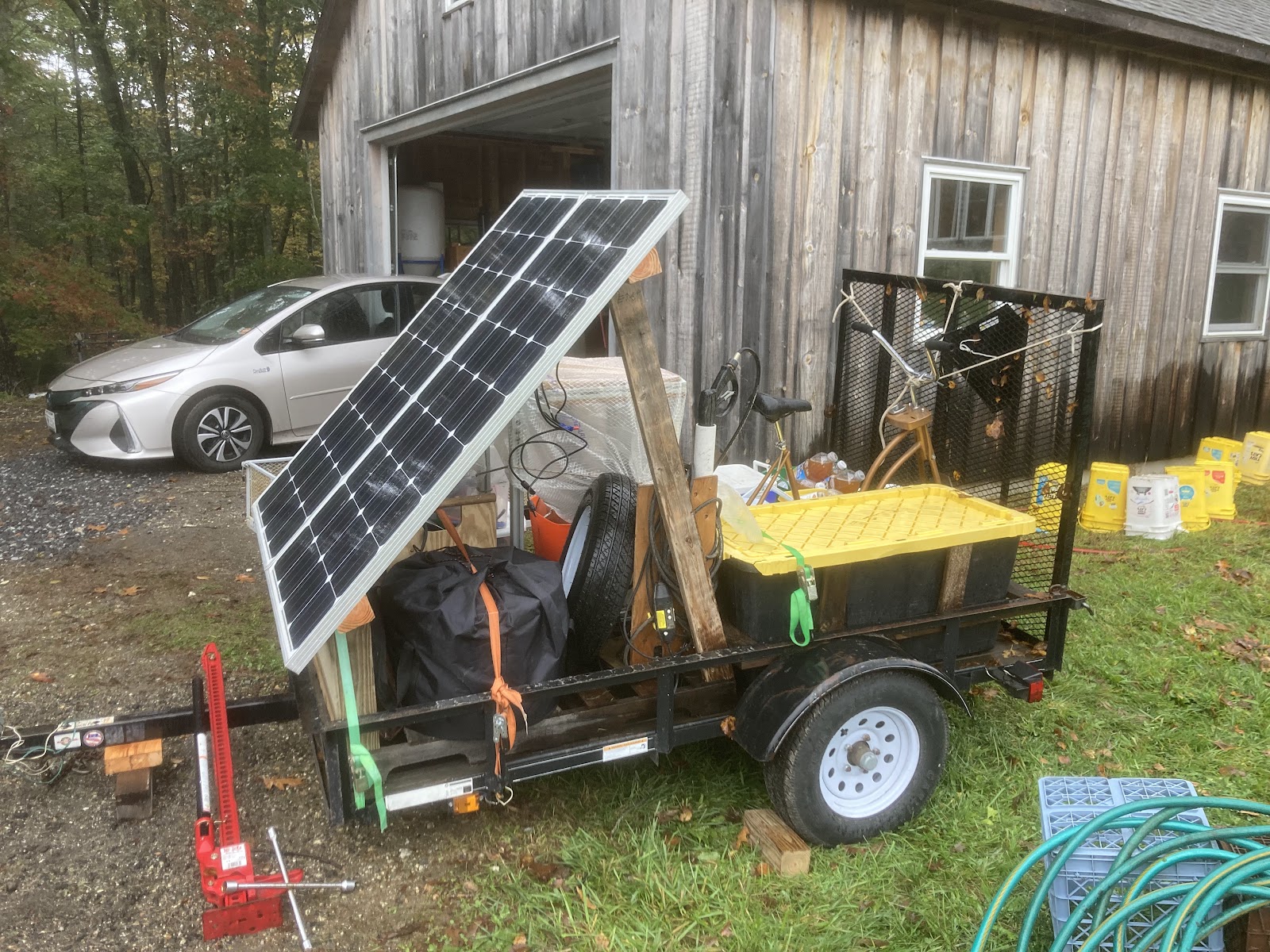
Rain had let up by Sunday morning for blueberry pancakes in the giant skillet, followed by the usual wrapping-up tasks including transfer of cider into four 6-gallon carboys, final sweet cider bottling, more sundry cleanup, and goodbyes. We loaded the pedal-hydraulic power stand (which is used for milling whole-grain flour at home), the PV rack pallet from the Seguinland demo, and various tools and oddments into our small trailer, and made it home comfortably before dark. All in all, a fine re-launching of the pedal-powered cider tradition. A number of refinements suggest themselves for next year, particularly a more ergonomic jug-filling station, a stronger and more adjustable modular support frame for the elevator/washer assembly, and possibly a palletized rebuild of the grinder frame, addressing the sporadic clogging issue in the post-crusher, and also potentially incorporating shifters for the grinder bikes (finally!) and a motor mount for optional solar power boost. Hearty thanks to everyone who helped make it happen, and here’s hoping for a better crop and even more familiar faces next year!




 Five Islands Orchard